
Introduction
What is Reiki and does it really work ? Reiki, a healing practice that originated in Japan, has gained widespread popularity in recent years as an alternative and complementary therapy for promoting physical, emotional, and spiritual well-being. This ancient technique centers on the principle of channeling universal life energy to stimulate the body’s natural healing processes.
As Reiki continues to captivate the curiosity of many, we’ve compiled a comprehensive list of 12 frequently asked questions to help shed light on this fascinating practice.
What is Reiki healing and How does Reiki work?
Reiki is a form of alternative healing that originated in Japan in the early 20th century. The word “Reiki” is a mix of two Japanese characters: “Rei,” which translates to “universal” or “spiritual,” and “Ki,” which means “life force energy.” The practice centers on the belief that there is a universal life force energy flowing through all living beings. When this energy is low or imbalanced, it can lead to physical, emotional, and spiritual issues. Reiki seeks to restore balance and promote well-being by channeling this healing energy.
During a Reiki session, a trained practitioner serves as a conduit for the universal life force energy. The recipient remains fully clothed and lies on a treatment table or sits in a comfortable chair. The practitioner places their hands lightly on or just above different areas of the recipient’s body, allowing the healing energy to flow through them and into the recipient. The energy is believed to be intelligent and will naturally go where it is needed most, promoting relaxation and restoring balance in the body’s energy system.
Reiki works on various levels to support overall well-being.
On a physical level, directing healing energy to specific areas can lead to pain relief, improved circulation, and support the body’s natural healing processes. Emotionally, Reiki is thought to help release emotional blockages and negative emotions that may be stored in the body, fostering a sense of emotional balance and well-being. Mentally, Reiki induces a state of deep relaxation, calming the mind and reducing stress and anxiety, which can lead to improved mental clarity and focus.
Moreover, Reiki is considered a spiritual practice, and some practitioners believe it can lead to spiritual growth, increased intuition, and a deeper connection to one’s inner self and the universe.
Reiki has gained popularity as a complementary holistic therapy in many cases. It works alongside conventional medicine as a supportive measure, promoting overall well-being and helping people on their journey toward better health and balance.
Reiki Articles You Might Like
Harnessing the Universal Energy: 54 Reiki Quotes to Inspire and Heal
11 Best Reiki Courses and Reiki Teachers on Udemy
Exploring the Power of Remote Reiki: Meet 5 Skilled Practitioners
Sleep Soundly with Reiki: How This Ancient Practice Can Improve Your Rest
Reiki and Massage : Similarity and Differences Explained
What is the origin of Reiki?
Reiki is a type of energy healing that originated in Japan. The word Reiki comes from the Japanese words for “universal life force energy.” There are different schools of thought about how Reiki began. Some people believe that it was developed by Buddhist monks, while others believe that it was rediscovered by a Japanese man named Dr. Mikao Usui. However, the most commonly accepted story is that Dr. Usui developed Reiki after experiencing a powerful spiritual awakening. During this awakening, he is said to have received guidance from the spirits of two great masters: a Buddhist monk named Koki and a Christian healer named Dr. Hayashi. These masters taught him how to use Reiki to heal the mind, body, and spirit.
Today, Reiki is practiced all over the world, and it is said to be beneficial for overall health and well-being. Reiki works with the body’s inherent capacity to heal itself.
What are the Benefits of Reiki Healing?
Reiki offers a wide range of potential benefits, both on a physical and emotional level. While individual experiences may vary, the following are some common benefits:
1. Stress Reduction: Reiki promotes deep relaxation, which can help reduce stress and its associated symptoms, such as tension, anxiety, and sleep disturbances.
2. Pain Relief: Reiki has been found to alleviate various types of pain, including chronic pain, muscle aches, headaches, and post-operative discomfort.
3. Emotional Balance: Reiki can aid in releasing emotional blockages and fostering emotional balance, leading to a sense of inner calm and increased emotional resilience.
4. Improved Energy Flow: By clearing energy blockages, Reiki enhances the flow of life force energy throughout the body, promoting vitality and overall well-being.
5. Enhanced Immune Function: Reiki may support the body’s immune system, helping it to function more efficiently and maintain optimal health.
6. Accelerated Healing: Reiki is believed to accelerate the body’s natural healing processes, making it beneficial for those recovering from injuries or illnesses.
7. Increased Self-Awareness: Reiki treatments can foster a deeper connection with oneself, leading to increased self-awareness and a better understanding of one’s emotions and needs.
8. Complementary Cancer Care: Reiki is often used as a complementary therapy in cancer care, providing support during chemotherapy and radiation treatments and helping manage side effects.
9. Relaxation and Improved Sleep: Reiki induces a state of deep relaxation, which can lead to improved sleep quality and better rest.
10. Emotional Release: Reiki can facilitate the release of stored emotions and emotional trauma, allowing individuals to experience a greater sense of emotional freedom.
11. Mental Clarity: Many recipients of Reiki report increased mental clarity, focus, and a greater ability to cope with life’s challenges.
12. Spiritual Growth: Reiki is considered a spiritual practice, and some individuals find that regular treatments deepen their connection to their spiritual self and lead to personal growth and enlightenment.
How to find a Reiki healer in your area?
There are a few things to keep in mind when looking for a reiki healer in your area. First, it is important to find someone who is certified and has experience. You can ask friends or family members for recommendations, or look for online reviews. Once you have a few names, it is a good idea to call each one and ask about their rates, availability, and process. It is also important to make sure that you feel comfortable with the healer before scheduling an appointment. Reiki works as a very personal experience, and it is important to find someone who you can trust. With a little bit of research, you should be able to find a qualified Reiki healer in your area. You can also find skilled Reiki Practitioners in YogChakra Reiki Directory.
What to expect during a Reiki healing session
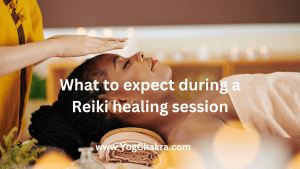
When you arrive for your reiki healing session,
1. you will be asked to lie down on a massage table or other comfortable surface.
2. You will be fully clothed during the session, and you may be asked to remove your shoes.
3. Once you are lying down, the practitioner will begin by placing their hands on your head.
4. They will then move their hands down your body, spending time on each of the seven main chakras.
5. You will undergo a Reiki attunement
You may feel a variety of sensations during the session, including heat, tingling, or coolness. The practitioner may also use other techniques, such as crystals or sound therapy.
The session will last for 30-60 minutes, after which you should feel relaxed and rejuvenated.
Other Wellness Articled You Might Like
A Holistic Approach to Health: Understanding the Four Components of Wellness
The Synergy of Yoga and Chiropractic Care: How They Promote Wellness
14 Holistic Wellness Practices to Achieve Well-being
The Ultimate Guide to Improving Your Well-Being Through the 8 Dimensions of Wellness
What is a Reiki attunement and how does it work?
Reiki attunement is a process that opens the practitioner to be able to channel higher levels of reiki energy. Reiki attunement works by opening up and clearing the chakras, or energy centers in the body, and creating a direct connection to the source of reiki energy. This allows the practitioner to draw on higher levels of Reiki energy for their treatments. Attunements can be given in person or remotely, and are typically done over the course of several days.
What do you feel during a Reiki attunement?
Some people feel warmth during a reiki attunement, while others feel a tingling sensation. Some people even feel like they are floating on a cloud. There is no wrong way to feel during a reiki attunement. The important thing is that you are open to the experience and willing to let the reiki energy flow through you. During a reiki attunement, you may also receive guidance from your reiki master or Higher Self. This guidance can come in the form of thoughts, images, or feelings. Pay attention to this guidance, as it can help you to understand how reiki works and how to use it in your life.
Are there any risks associated with Reiki healing?
While reiki is generally considered to be safe, there are some risks associated with this type of healing. First, as with any type of energy therapy, there is a risk of becoming overloaded with energy. This can lead to symptoms such as headaches, fatigue, and dizziness. Second, reiki healing can sometimes trigger negative emotions or memories. This can be emotionally overwhelming and may even cause further distress. Finally, reiki healing can sometimes interact negatively with other medical treatments. Therefore, it is important to discuss any possible risks with your doctor before beginning reiki therapy.
What is the cost of Reiki healing sessions?
The cost of reiki healing sessions can vary depending on the practitioner. Some practitioners charge by the session, while others may charge by the hour. The length of the session also varies, but typically lasts between 60 and 90 minutes. Some practitioners also offer discounts for multiple sessions or for referrals. The average cost of a single reiki session is between $60 and $80. However, the cost is not always an indicator of quality, and it is important to choose a practitioner that you feel comfortable with.
Is there scientific research on Reiki healing and what are their findings?
There is a lot of anecdotal evidence that suggests reiki healing works. But what does scientific research say? The findings were in favor of Reiki’s healing capacity.
A 2008 study published in The Journal of Alternative and Complementary Medicine looked at the effects of reiki on patients undergoing surgery. The study found that reiki works to significantly reduced anxiety levels in patients before surgery. In addition, patients who received reiki reported less pain and fatigue after surgery, and they had a quicker recovery.
A 2012 study published in Integrative Cancer Therapies also found reiki to be effective in reducing cancer-related fatigue. In addition, reiki has been shown to improve sleep quality, reduce stress, and decrease feelings of depression and anxiety. While more research is needed to definitively prove that reiki is effective, the available evidence suggests that reiki healing can offer real benefits for people suffering from a variety of conditions.
Reiki Research Finding from Harvard University:
“It’s been a long time coming, but the Reiki study conducted at Harvard by members of the Center for Reiki Research (Dr. Natalie Trent, Dr. Ann Baldwin, and William Rand) in 2015 and 2016 has now been accepted for publication in the Journal of Alternative and Complementary Medicine! This is the largest prospective Reiki study to date and hopefully will lead to more research.
A total of 1411 Reiki sessions were conducted and included in the analysis. Statistically significant improvements were observed for all outcomes of psychological and physical health, including pain, drowsiness, tiredness, nausea, appetite, shortness of breath, anxiety, depression, mood, and overall well-being, with moderate to large effects.
The results from this large-scale multi-site effectiveness trial suggest that a single session of Reiki improves physical and psychological health.”
How to Become a Reiki Practitioner?
Becoming a reiki practitioner is not as difficult as one might think. The first step is to learn about reiki and how Reiki works. This can be done by reading books or attending workshops. Once you have a basic understanding of reiki, you can begin practicing on yourself. This will help you to develop your skills and become more attuned to the reiki energy. After you have gained some experience, you can then begin offering Reiki treatments to others. It is important to remember that Reiki is a healing modality, not a religion. As such, anyone can learn how to use reiki regardless of their spiritual beliefs. Reiki healing involves a process of attunement. It is best if you receive attunement training from a Reiki master. So, studying with a Reiki master is highly recommended but not required. There are many holistic institutions that offer courses in Reiki Healing.
Our Popular Yoga Articles
Exploring the Divine Feminine: A Journey Through the 10 Goddesses in Yoga Practice.
Mindful Living: 54 Yoga Affirmations for a Conscious Mindset
Unlocking the Spiritual Meanings of 18 Popular Yoga Symbols
The Science of Yoga: 8 Proven Ways Yoga Reduces Stress
Building Strength the Yogic Way: A Guide to Harnessing the Power of Yoga
Bending, Not Breaking: How Yoga Can Help You Achieve Flexibility
So, how many people practice Reiki in the US?
Though reiki’s popularity has grown in recent years, it is still considered a fringe practice by many mainstream medical professionals. Because of how Reiki works, it is often dismissed as a “pseudo-medical” treatment with no scientific basis. However, a growing body of research suggests that reiki may offer real benefits for both physical and mental health. One study found that reiki can help to reduce pain and anxiety in cancer patients undergoing treatment. Another study found that reiki can help to improve symptoms of depression. While more research is needed to confirm these findings, there is evidence that reiki may be a helpful addition to conventional medical care. As more people learn about the potential benefits of reiki, it is likely that its popularity will continue to grow.
According to a 2014 article in the Washington Post 1.2 million adults in the US practice Reiki. The number has been growing since then!
Conclusion
Gaining an understanding of Reiki and its 12 frequently asked questions provides valuable insights into this ancient healing practice. Reiki, with its origins rooted in Japan, offers a unique approach to holistic healing by harnessing the power of universal life force energy. As a complementary therapy, Reiki has shown promise in alleviating stress, promoting emotional balance, and supporting the body’s natural healing processes.
The journey of exploring Reiki leads to a realization that it transcends religious boundaries, making it accessible and beneficial for people from all walks of life. Its gentle and non-invasive nature makes it suitable for individuals of all ages, promoting relaxation, emotional release, and spiritual growth. As Reiki continues to captivate the curiosity of many, it is essential to seek qualified practitioners and understand that it complements rather than replaces conventional medical treatments.
By embracing the principles of Reiki, individuals can tap into its potential to promote overall well-being, foster inner harmony, and embark on a journey toward greater self-awareness and emotional healing. As we continue to explore the profound impact of Reiki on our mind, body, and soul, it is evident that this ancient healing practice continues to hold a special place in the realm of holistic wellness.
Are you a Reiki Master, or a holistic health care provider? You are welcome to add your business to our wellness directory here. To find Reiki practitioners listed on our site browse our wellness directory here
DISCLAIMER
The content on our site does not provide any medical advice and only reflects the opinion of writers. You should always consult a qualified healthcare professional before making any decisions about your health or well-being.


