
Guest Post By : Aiyana Fraley
Introduction
As a massage therapist with 26 years of experience and a yoga teacher for 13, I have had the privilege of working deeply with the body’s mechanics, energy flow, and the profound connection between movement and healing. Over the years, I have found that Thai massage and yoga are two deeply interconnected practices that, when combined, create a synergy that enhances physical, mental, and energetic well-being.
While yoga encourages mindful movement and breath awareness, Thai massage acts as a catalyst for deeper flexibility, energetic alignment, and overall relaxation. The two practices are rooted in ancient wisdom, and together, they offer a comprehensive approach to holistic health.

The Physical Connection: Enhancing Range of Motion and Flexibility
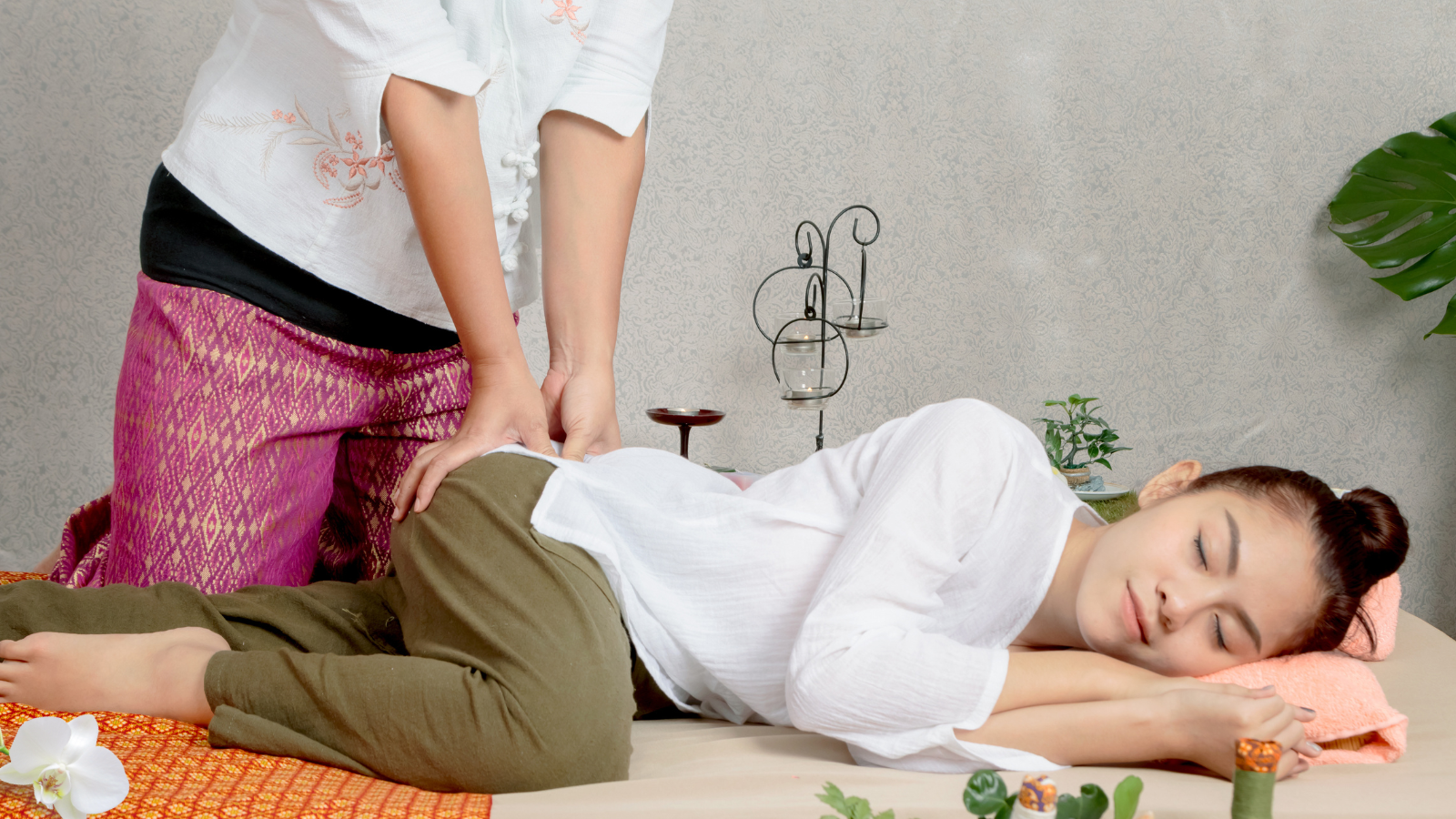
One of the most immediate and noticeable benefits of Thai massage for yoga practitioners is the improvement in flexibility and range of motion. Unlike traditional Western massage, which primarily involves direct pressure on muscles, Thai massage incorporates assisted stretching, passive yoga postures, and rhythmic compression along the body’s energy lines.
As a practitioner, I often describe Thai massage as “lazy yoga” for clients because it involves many of the same movements and postures as yoga, but the therapist does the work for you.
For yoga practitioners, Thai massage serves as an excellent complement by helping to release chronic tension that may be limiting their practice. Even the most dedicated yogis accumulate muscular tightness from repetitive movements, prolonged postures, or simply the physical demands of daily life.
By receiving Thai massage, yogis can experience a deeper release in areas that might otherwise remain restricted. For example, in my sessions,
I often help clients achieve a deeper hip opening, loosen tight hamstrings, or release built-up tension in the shoulders—areas that frequently hold resistance in asana practice.
The Relaxation Response: Letting Go of Resistance
One of the greatest barriers to deepening a yoga practice is mental and physical resistance. Thai massage works directly with the nervous system to promote relaxation, making it an incredible tool for those who struggle with surrendering in their yoga practice. The slow, mindful application of pressure and movement in Thai massage encourages the body to enter a parasympathetic state—the “rest and digest” mode—allowing muscles to soften naturally without force.
I’ve often observed that after receiving a Thai massage, my clients enter their yoga practice with a newfound sense of openness and ease. The body, having already been stretched and massaged, moves with greater fluidity, allowing for a more meditative experience.
The practice of yoga then further integrates these benefits, reinforcing the sense of balance and tranquility cultivated in the Thai massage session.
Energy Alignment: Sen Lines and Nadis
Both Thai massage and yoga are built upon the foundation of energy flow. In Thai medicine, energy pathways are called Sen lines, while in yoga’s Ayurvedic and yogic traditions, they are known as Nadis. These lines or channels serve as highways for Prana (life force energy) in yoga and Lom (wind energy) in Thai massage.
When these energy channels become blocked, it can manifest as stiffness, fatigue, or emotional imbalance. Thai massage works by applying rhythmic pressure along the Sen lines, stimulating energy movement, and clearing stagnation. Similarly, yoga postures (asanas) are designed to open the Nadis, allowing Prana to flow freely.
As someone trained in both modalities, I have found that Thai massage helps yogis move through energetic blockages that may not be accessible through yoga alone. For example, deep pressure along the Sen Kalathari line (which runs along the inner leg and lower abdomen) can support the release of emotional tension stored in the hips, an area many yogis recognize as a place of deep emotional holding. Likewise, the gentle twisting and compression techniques in Thai massage assist in detoxifying the body, supporting the energy work done in yoga twists and pranayama practices.
The Mind-Body Integration: A Holistic Approach
Thai massage is often called a “meditation in movement,” much like yoga is a moving meditation. Both practices require presence, awareness, and breath control. Thai massage is performed in a rhythmic, flowing manner, with both the giver and receiver engaging in a dance-like exchange of movement and breath.
As a yoga practitioner and Thai massage therapist, I often integrate mindful breathing into my sessions, encouraging clients to breathe deeply as I move them through stretches and compressions. This practice not only enhances relaxation but also deepens the connection between mind and body.
Incorporating Thai massage into a yoga lifestyle provides a well-rounded approach to self-care. For those who practice yoga daily, adding Thai massage into their routine—even once a month—can help prevent injuries, accelerate muscle recovery, and maintain optimal range of motion. More importantly, it cultivates a deeper awareness of the body’s needs and cultivates a sense of self-compassion that extends beyond the mat.
Bringing It All Together: Practical Ways to Integrate Thai Massage and Yoga
For yoga practitioners looking to integrate Thai massage into their routine, here are a few recommendations:
1. Schedule Regular Thai Massage Sessions – Even once a month can provide immense benefits for recovery and flexibility.
2. Incorporate Self-Massage Techniques – Learning simple Thai massage techniques for the feet, legs, and shoulders can enhance your self-care practice.
3. Use Thai Massage as a Recovery Tool – After an intense yoga session, receiving a Thai massage can help muscles recover more effectively.
4. Practice Breath Awareness During Massage – Conscious breathing during Thai massage deepens relaxation and enhances energy flow.
As someone who has walked the path of both yoga and Thai massage, I can confidently say that they are two sides of the same coin. When combined, they create a holistic approach to wellness that nurtures both the physical and energetic body. Whether you’re a dedicated yogi or someone looking for a deeper connection to your body, Thai massage can be the missing piece in your wellness journey, offering a new level of openness, balance, and harmony.
Author Bio
Aiyana Fraley is a seasoned holistic health practitioner with over 25 years of experience in massage therapy, specializing in Thai massage since 2016. As a Reiki Master Teacher, yoga instructor, and herbalist, she integrates a mind-body-spirit approach to healing, empowering others to reconnect with their innate well-being.
Her expertise in energy work, movement therapy, and plant medicine offers a comprehensive path to wellness, making her a sought-after guide in the field.
Passionate about both ancient healing traditions and modern therapeutic applications, Aiyana has dedicated her life to exploring the many ways we cultivate balance, resilience, and transformation.
Click to schedule a Thai massage with Aiyana here
Visit site here


